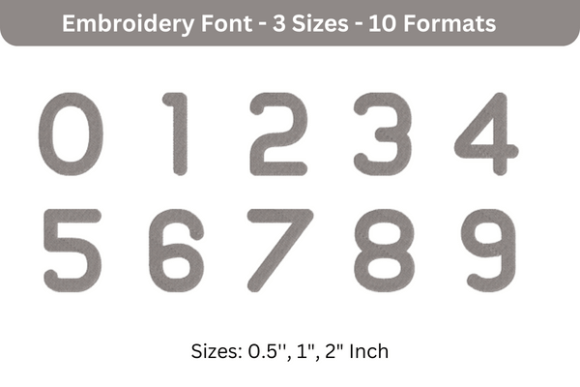
Ubuntu Font 0 to 9: A Designer’s Stitch Test
As a professional embroidery designer and product reviewer, I approach every new digitized asset with a healthy dose of skepticism. We have all downloaded fonts that look pristine on screen but turn into thread nests or illegible blobs once the needle hits the fabric. When evaluating the Ubuntu Font 0 to 9 set, my primary focus was not just on the aesthetic appeal of the numerals, but on their structural integrity during actual production. For small business owners, Etsy sellers, and makers preparing for the Back To School rush or creating personalized gifts, the difference between a font that merely exists and one that performs is the difference between a return request and a five-star review.
First Impressions: Clean Geometry Meets Thread Reality
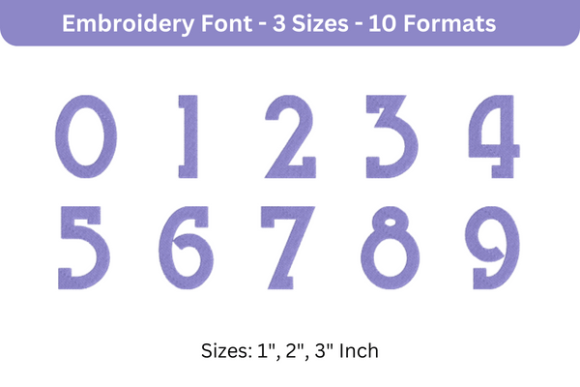
My initial assessment of this machine embroidery design centers on its visual personality. The Ubuntu typeface is renowned in the graphic design world for its humanist sans-serif structure, featuring open curves and a friendly, approachable mood. Translating this to an embroidery file is challenging because those open curves require precise stitch placement to avoid looking jagged. Upon loading the digital embroidery file into my software, the digitization appears respectful of the original typeface. The numerals possess a modern clarity that avoids the overly decorative flourishes that often plague embroidery fonts. This makes it an excellent candidate for projects where readability is paramount, such as graduation years on sweatshirt embroidery, ages on baby embroidery items, or pricing tags for craft business merchandise.
The mood this font creates is distinctly contemporary yet warm. It lacks the rigid coldness of industrial block letters but avoids the informality of handwriting scripts. For a handmade product, this balance is crucial. It signals professionalism without sacrificing the personal touch that customers seek in custom apparel and personalized gifts. When I visualize this on a finished product, I see it fitting seamlessly into boutique branding and minimalist nursery decor rather than ornate vintage styles.
Real-World Application: The Custom Tote Bag Test
To truly judge the utility of Ubuntu Font 0 to 9, I mentally applied it to a specific, high-demand scenario: creating custom canvas tote bags for a local school fundraiser. This is a classic Back To School project that requires durability, legibility, and speed. Canvas is a textured fabric that can swallow fine details, so the stitch density and column width of the numerals are critical.
In this application, the font’s performance hinges on how the satin stitch handles the curves of numbers like '3', '6', and '8'. A poorly digitized version would result in puckering along the inner curves or gaps in the outer edges. With this design, the transition points appear managed well for medium-weight fabrics. For a tote bag design, I would recommend using a tear-away stabilizer with a light spray adhesive to keep the canvas taut. The numerals are bold enough to stand out against the natural canvas texture without requiring excessive underlay that could make the bag stiff. This practical balance makes it a reliable choice for commercial embroidery projects where you need to produce dozens of units efficiently while maintaining a high-quality handmade presentation.
Navigating Fabric Variables and Hoop Constraints
While the design shines on stable fabrics, experienced makers know that versatility is tested on difficult materials. If you plan to use Ubuntu Font 0 to 9 on stretchy knits for t-shirts or lightweight jersey for baby clothes, caution is required. The clean lines of this font will highlight any fabric distortion. You must use an appropriate cut-away stabilizer and potentially a topping to prevent the stitches from sinking into the knit loops. On dark fabrics, ensure your thread colors provide sufficient contrast; the moderate weight of the numerals means they won't dominate visually if the color value is too similar to the background.
Hoop size selection also demands attention. While these are single digits, scaling them down for tiny labels or sleeve cuffs requires verifying the minimum recommended size in your embroidery software. Reducing satin stitch columns below a certain threshold can cause thread breaks or needle deflection. Conversely, enlarging them significantly for large pillow covers or blankets may expose the underlying fill stitch structure if the design wasn't digitized with expansion in mind. Always check the specific parameters of your embroidery file before committing to a production run. For curved surfaces like caps, test the alignment first; the upright nature of Ubuntu may need slight manual adjustment to compensate for the curve of the hat brim to appear straight to the human eye.
Elevating Product Value and Customer Trust
The choice of typography in embroidery directly influences perceived value. Sloppy, inconsistent, or illegible stitching undermines the effort put into the rest of the garment. Ubuntu Font 0 to 9 contributes to brand consistency, which is vital for Etsy sellers and small shop products. When a customer sees a clean, well-executed date on a holiday embroidery ornament or a crisp class year on a varsity jacket, it reinforces trust in your craftsmanship. This font’s neutrality allows it to pair beautifully with applique designs or complex illustrations without competing for attention. It acts as a supportive element that enhances the overall composition rather than distracting from it.
For digital product sellers offering printable mockups or design assets, this font’s recognizable yet distinct style helps create realistic previews. Buyers can instantly gauge how their personalization will look, reducing pre-sale questions and increasing conversion rates. In the realm of commercial embroidery, consistency across different garments builds recognition. Using a standardized, high-quality numeral set ensures that whether you are stitching an apron for a café or a patch for a corporate event, the branding remains cohesive and professional.
Essential Pre-Stitch Checklist for Makers
Before you load this design for a client order or a new inventory batch, adhere to these practical designer notes to ensure success:
- Test on Scrap Fabric First: Never assume settings transfer perfectly between fabric types. Stitch out the full numeric set on a scrap of your actual project material to check for tension issues or registration errors.
- Verify Licensing Terms: Confirm whether your purchase includes commercial rights for selling finished products or if it is limited to personal use. This is non-negotiable for craft business owners and Etsy sellers.
- Check Stitch Density Settings: Review the density in your machine or software. If stitching on thick towels or fleece, you may need to increase density slightly; for sheer fabrics, decrease it to prevent perforation.
- Evaluate Thread Color Contrast: Test your chosen thread colors in natural lighting. What looks good on a computer monitor may lack definition when stitched in rayon or polyester thread.
- Inspect Small Details: If resizing for baby embroidery or collar tags, zoom in to ensure the inner counters of numbers like '4', '6', and '9' remain open and won't close up during stitching.
- Confirm Hoop Size Compatibility: Ensure the physical dimensions fit your available hoops without requiring excessive re-hooping or awkward placement near seams.
- Review Stabilizer Pairings: Match your stabilizer weight to both the fabric and the stitch count. Over-stabilizing can make the area bulletproof; under-stabilizing causes puckering.
- Mockup Validation: Create black and white mockups alongside color versions to verify that the design relies on form rather than just color contrast for legibility.
Ultimately, Ubuntu Font 0 to 9 represents a solid, functional tool for the modern embroiderer. It bridges the gap between digital precision and tactile warmth, making it suitable for everything from sentimental personalized gifts to high-volume commercial embroidery. By treating this font as a component of a larger production workflow—testing it, respecting fabric limitations, and applying it with intention—you transform a simple digital file into a hallmark of quality in your finished products. Whether you are outfitting a classroom for Back To School or building a signature product line, this design offers the reliability that professional results demand.